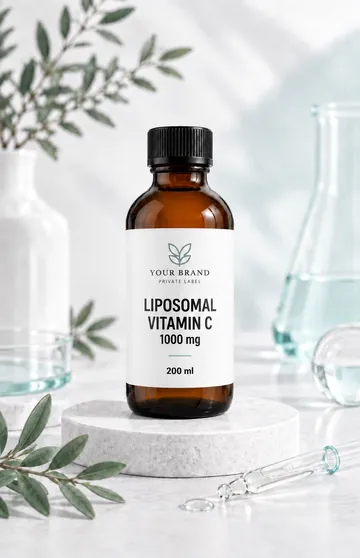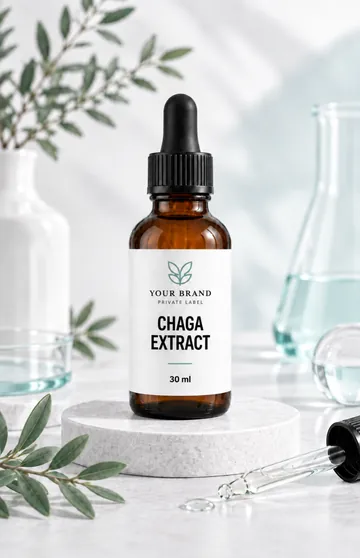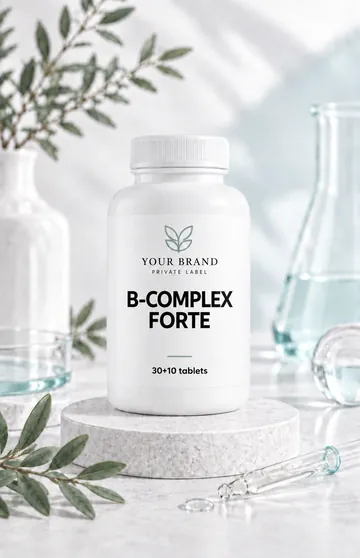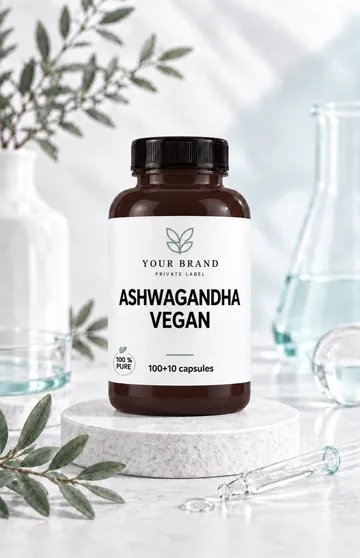
What private label, white label and contract manufacturing mean
All three models give you a food supplement under your own brand. They differ in who owns the formula and how far the product is adapted for you. None of these terms is defined in EU food law, so always check what a supplier means by them in the offer or the contract.
- White label is a ready-made product with a standard formula that a manufacturer supplies to several companies. Each sells it under its own brand; only the label, and sometimes the packaging, changes.
- Private label is a product made for one brand and sold only under that brand. In the narrow sense it includes an adapted formula (dose, flavour, pack size) and often exclusivity. In everyday use, however, ‘private label’ is a general term for any supplement under your own brand, including ready-made formulas.
- Contract manufacturing means the manufacturer produces to the client’s formula and specification. The client owns the formula, or develops it with the manufacturer.
The same EU rules for food supplements apply to all three models (Directive 2002/46/EC). The difference is who does which work and what it costs.
How the models differ in practice
The main differences are the minimum order, the price, the time to market and exclusivity. The table gives a general comparison; FluidLabs figures follow in a later section.
| White label | Private label with adaptation | Contract manufacturing | |
|---|---|---|---|
| Formula | ready-made, standard | ready-made, adapted for you | yours, or developed to order |
| Who owns the formula | the manufacturer | as agreed | usually you, as set in the contract |
| Minimum order | low | higher, depends on the change | high |
| Price per unit | known in advance from a price list | individual quote | individual quote |
| Launch costs | label design, notification | plus adapting the formula | plus development, samples, formula review |
| Time to market | short | longer | long, including development |
| Exclusivity | no | as agreed | as set in the contract |
| Label documents | supplied by the manufacturer | supplied by the manufacturer, updated for the changes | prepared by you or included in the offer |
In every model, the business under whose name the product is marketed is responsible for the food information (Article 8 of Regulation (EU) No 1169/2011). The model does not change who is responsible for the label. It only changes how many documents the manufacturer prepares for you.
The choice of health claims is always yours. Authorised claims are in the EU Register; the rules are explained in our guide Health claims on food supplements.
In most EU countries, a food supplement must be notified to the competent national authority before it is placed on the market (Directive 2002/46/EC, Art. 10). Requirements differ by country; see Food supplement notification in the EU. The label must be in a language easily understood by consumers in each country of sale (Regulation (EU) No 1169/2011, Art. 15), as explained in Food supplement label requirements.
When to choose a ready-made formula
A ready-made formula (white label) suits you when you want to start quickly, with little capital, and find out whether the product sells. Typically when you:
- are launching a brand and want to test demand,
- are adding a new form to your range, for example liquid and liposomal supplements,
- sell to your own customers (online shop, pharmacy, practice) and need the goods quickly,
- do not want to tie up money in thousands of units.
The downside is that other brands can sell the same formula. You stand out through your brand, design, price and the way you sell. That is why it makes sense to protect your brand name; see Trade mark for a supplement brand.
When to adapt a formula or use contract manufacturing
Your own or an adapted formula makes sense when you know your sales, plan larger volumes and want a product that is not available elsewhere. Typically when you:
- have proven sales and volumes that cover the minimum for a custom formula,
- need a different dose, combination of ingredients, flavour or pack,
- want exclusivity or ownership of the formula,
- have a formula from your own food technologist and are looking for a manufacturer.
Expect a higher minimum order, development and samples, and a longer time to market. Part of the regulatory work, such as reviewing the formula against the rules of your markets and preparing label texts, will be yours or part of the manufacturer’s offer.
A step-by-step path is common: start with a ready-made formula, test your sales and move to your own formula once volumes are larger.
Buying from a manufacturer in another EU country
You can buy from a manufacturer in another member state and sell under your brand at home. Some rules, however, stay national.
- Notification is made in each country where you sell, where it is required. A notification in the manufacturer’s country does not cover yours.
- Plants and other substances are not fully harmonised in the EU, so check the formula against the rules of each of your markets.
- Label language must suit each country of sale.
- VAT: supplies to businesses with a valid EU VAT number in another member state are generally VAT-exempt (reverse charge).
Details are in our guide Sourcing supplements from another EU country.
How it works at FluidLabs
FluidLabs offers two models: Ready-to-Go (ready-made formulas under your brand, from 25 units, with or without our label) and contract manufacturing (an adapted ready-made formula or your own specification). On our website we call Ready-to-Go private label. In the narrow sense it is white label, because ready-made formulas are not exclusive.
| Ready-to-Go | Contract manufacturing | |
|---|---|---|
| Formula | 180 ready-made formulas, including 54 liposomal | an adapted ready-made formula, or made to your specification |
| Minimum order | 25 units per product; products can be combined | roughly from 100 litres for liquid and liposomal products, from 30,000 tablets or capsules for tablets and capsules, from 100 kg for powders |
| Price | public price list: 25–49, 50–99, 100–249 and 250–999 units; 1,000 units and more on individual quote | individual quote |
| Label | optional: printing to your artwork and labelling for €0.30 per unit, no set-up fee | label documents based on the formula, labelling |
| Time | usually dispatched within 3–5 working days of receiving your label artwork, if the product is in stock | agreed individually, depending on the formula |
| Exclusivity | no | can be agreed |
Label printing is optional. We can also deliver the products without a label and you apply your own; you pay only for the products. Either way, you receive label texts in selected languages, a 1:1 dimension template and a guide for your designer. Your designer supplies the artwork; we check the final PDF and send you a proof.
Prices are in euros per unit, excluding VAT. Supplies to businesses with a valid EU VAT number in another member state are generally VAT-exempt (reverse charge); we state this on the invoice. Payment is 100 % in advance. We deliver across the EU. Shipping costs are always confirmed before payment.
In most EU countries, the product must be notified before it is placed on the market. We’ll advise you and prepare the documents.
The range includes liquid and liposomal supplements, mushroom tinctures, drinks, honey products, tablets, capsules and powders, all made in the EU (Slovakia). All formulas with composition and prices are in the product catalogue; prices by quantity are in the price list.
What to clarify before choosing a model
Choose the model according to your budget, expected sales, time and whether you need exclusivity. Five questions help:
- How many units will you sell within the product’s shelf life? If you don’t know, start with a smaller quantity.
- How much money do you want to tie up in the first order? Work it out in the margin calculator.
- Do you need the goods now, or do you have time for development and samples?
- How do you want to stand out: through the formula, or through your brand and the way you sell?
- Who on your side will handle the label, the choice of claims and the notification in each country of sale?
If your answers are ‘I don’t know’, ‘as little as possible’ and ‘now’, start with a ready-made formula. If you have a clear volume and want a product of your own, ask for a contract manufacturing quote.
How we can help
To start, choose ready-made formulas in the product catalogue and order from 25 units per product, with or without our label; details are on the private label page. If you need a different dose, flavour or a completely new product, send us your brief via contract manufacturing. We’ll review the formula and come back with the price, minimum order and timing. Questions are welcome through the enquiry form.
Frequently asked questions
What is the difference between private label and white label?
White label is a ready-made product with a standard formula that a manufacturer supplies to several brands; only the label changes. In the narrow sense, private label is a product adapted and made for one brand only. In practice, ‘private label’ is also used for any supplement sold under your own brand, including ready-made formulas.
What is contract manufacturing of food supplements?
The manufacturer produces a supplement to the client's formula and specification. The client owns the formula, or the manufacturer develops it to order. Minimum orders are higher than for ready-made formulas. At FluidLabs they start at roughly 100 litres for liquid and liposomal supplements, 30,000 tablets or capsules for tablets and capsules, and 100 kg for powders.
Which model should I start with?
A ready-made formula (white label). You can start with a small quantity, you know the price in advance and you get the goods quickly. At FluidLabs you can order from 25 units per product. Finished products with your label are usually dispatched within 3–5 working days of receiving your label artwork, if the product is in stock.
Is a ready-made formula exclusive to me?
No. Ready-made formulas are not exclusive, so other brands can sell the same formula. Exclusivity can be agreed for contract manufacturing.
Who is responsible for the label of a private label product?
The business under whose name the product is marketed (Article 8 of Regulation (EU) No 1169/2011), so usually you as the brand owner. The manufacturer supplies the composition and documents; the choice of health claims is yours. FluidLabs provides label texts in selected languages and helps with notification in your country.
Can I start with a ready-made formula and switch to my own later?
Yes, this is a common path. Start with a ready-made formula from 25 units, test your sales, and move to your own formula once your volumes justify it.
Sources
This text is general information, not legal advice. Rules change; check the current wording before placing a product on the market.